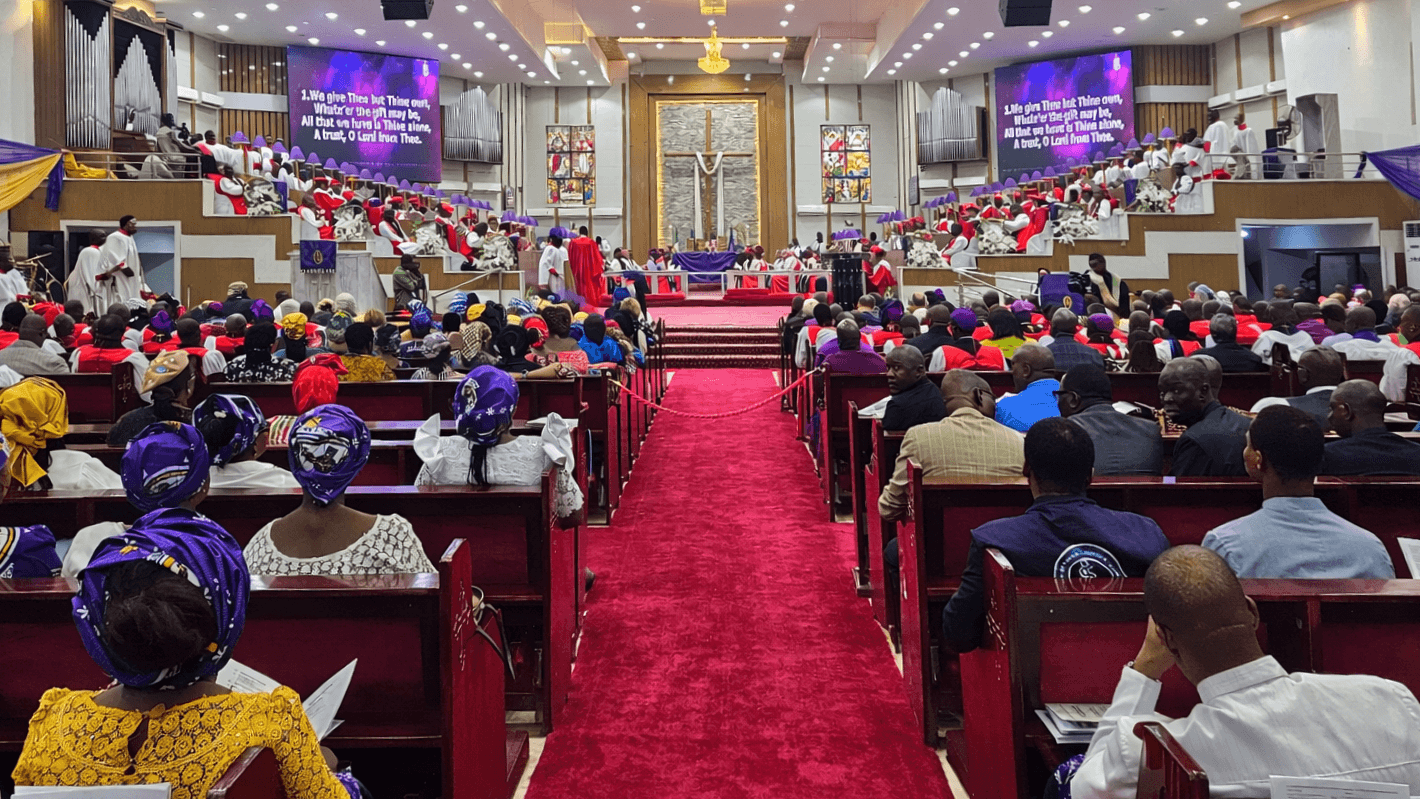
The opening day of the GAFCON G26 gathering in Abuja, Nigeria (3–6 March 2026) marks a moment that may prove deeply significant for the future of global Anglicanism. Whether one welcomes or worries about the developments underway, it is difficult to deny that something historically important is taking place.
Nearly 475 delegates are present, including around 350 bishops from 21 countries, making this one of the largest gatherings of Anglican episcopal leadership in recent decades. The meeting was originally summoned in October 2025 as a gathering of bishops but was later broadened to include clergy and lay representatives.
Even at this early stage, the tone of the gathering has been striking. GAFCON leaders are presenting the meeting not simply as another conference but as a historic turning point, potentially remembered in Anglican history for centuries to come.
A Gathering with Global Implications
The Global Anglican Future Conference (GAFCON) describes itself as a movement of “authentic Anglicans, guarding God’s gospel.” Formed in 2008 amid theological disputes within the Anglican Communion, it has steadily developed into a global network linking churches and leaders committed to conservative theological convictions.
The current meeting is being held at Vining Memorial Church Cathedral in Abuja and runs over four days. What makes this gathering particularly significant is that GAFCON leaders are discussing the creation of a new leadership structure for their movement.
According to statements released ahead of the conference, the Global Primates Council intends to elect a chairman who will serve as primus inter pares; a “first among equals.” The announcement is expected later in the week. Such a move would effectively create a recognised global leader within the GAFCON movement and would inevitably be seen as a challenge to the historic role of the Archbishop of Canterbury as the symbolic focus of Anglican unity.
The timing is also striking. The meeting comes only weeks before the official installation of the new Archbishop of Canterbury, the Most Rev Sarah Mullally, who will become the first woman to hold the role of spiritual leader within the Church of England.
A Deepening Global Debate
The discussions taking place in Abuja are the latest chapter in a long-running debate within the Anglican Communion.
GAFCON leaders argue that theological developments within parts of the Communion, particularly around sexuality and church leadership, have moved away from historic Christian teaching. The movement opposes changes such as the blessing of same-sex unions in some Western provinces and has also voiced objections to the ordination of women in certain leadership roles.
The appointment of Archbishop Sarah Mullally last October intensified these concerns. Some conservative leaders protested the decision, while others across the Anglican world welcomed it.
Reuters reported that Francis Aduroja, a priest from southwest Nigeria, hopes the bishops gathered in Abuja will defend historic Christian teaching as they deliberate about the future.
“We want them to defend the faith of our fathers… to come back with words to encourage priests and parishioners that we are still upholding the gospel with no backing out and no compromise.”
At the same time, other voices within the global church have taken a different view. Kenya’s first female Anglican bishop, Emily Onyango, has welcomed Archbishop Sarah’s appointment, reflecting the diversity of opinion across the Anglican world.
Beyond the immediate theological debates, some observers have raised questions about Archbishop Sarah’s background and how it prepares her for the demands of leading a worldwide communion. Before entering ordained ministry she had a distinguished career in nursing, eventually serving as Chief Nursing Officer for England, bringing with her considerable leadership experience and a widely recognised pastoral and relational style.
However, at a time when the Anglican Communion is wrestling with complex theological questions, some have expressed concern that the role may require particularly strong theological leadership. For some critics, Archbishop Sarah is viewed as something of an outsider to traditional Anglican theological circles.
Her publicly expressed views on matters such as human sexuality and abortion have also drawn scrutiny. She is generally perceived to hold more liberal positions on these issues, which has been a source of concern for many conservative Anglicans around the world.
Much of the public discussion has focused on the fact that she is the first woman to be appointed Archbishop of Canterbury. While that is certainly significant for some within the Communion, it is only one element within a wider set of questions about leadership, theology, and the future direction of the church. As with many issues in global Anglicanism, opinions remain deeply divided.
The Message from the Opening Eucharist
The tone of the conference was set at the opening Eucharist held at the Cathedral of the Advent in Abuja, where the Primate of Nigeria, Archbishop Henry Ndukuba, delivered a forceful address built around Joshua’s challenge:
“Choose this day whom you will serve.” (Joshua 24)
Archbishop Ndukuba framed the gathering as a decisive moment for Anglican leadership. Drawing on Article 19 of the Thirty-Nine Articles, he argued that churches can err in matters of faith and practice and suggested that recent developments within the Anglican Communion have reached such a point.
In language that drew sustained applause from those present, he declared:
“The future has arrived. The church of God will continue to march on, not built on the institutions of Canterbury or on the personality of the Archbishop of Canterbury, but returning the Holy Scriptures to the centre of our life, teaching and practice.”
Throughout the sermon he warned against what he described as “the giants of compromise” and the “Babylonian spirit of the age,” portraying the current moment as a spiritual struggle over the authority of Scripture.
He urged bishops and church leaders to stand firm in their convictions:
“God is searching for men and women who will not compromise the truth of his word for the applause of the world.”
Drawing on the biblical example of Joshua and Caleb, he called those present to be leaders with a “different spirit”, people prepared to stand faithfully even when the path is difficult. Significantly, he acknowledged that the direction GAFCON is taking may not be easy.
“The way we have chosen will not be an easy way, but God will never leave his people.”
The sermon clearly framed the gathering as a decisive moment in the struggle to preserve what participants understand as orthodox Christian teaching within Anglicanism.
Attendance and Representation
According to reports from those present, around 475 delegates are attending, including roughly 350 bishops. Representatives have come from 21 countries, spanning Africa, the Americas, Europe, and parts of Asia and Oceania. However, attendance patterns also reveal a more complex picture.
Only a limited number of primates are confirmed to be present. Some of these are not from GAFCON aligned provinces and are there as observers, and some represent jurisdictions outside the officially recognised structures of the Anglican Communion. A number of primates previously associated with GAFCON appear not to be present, including those from Egypt, Myanmar, the Democratic Republic of Congo, and South Sudan.
These dynamics remind us that the Anglican world remains diverse and that even within conservative networks there are different approaches to the current moment.
The Global South Fellowship Question
One of the interesting tensions surrounding the Abuja meeting concerns the relationship between GAFCON and the Global South Fellowship of Anglican Churches (GSFA).
In previous years there had been hope that these two networks might work together in shaping the future of orthodox Anglicanism. Interviews conducted during the 2023 Kigali gathering reflected that aspiration, as did the attendance of many GAFCON aligned representatives at the 2024 GSFA assembly in Egypt. However the absence of some GAFCON aligned Primates, who are also active in the GSFA, suggest an uneasiness with the approach being taken in Abuja.
For those of us who long to see unity among orthodox Anglicans, this remains an area of real concern.
Nigeria and the Shifting Centre of Anglicanism
Holding the conference in Abuja carries considerable symbolic weight.
Nigeria is the largest Anglican province in the world, with tens of millions of members. Its leaders have played a central role in the GAFCON movement from the beginning. Former Nigerian primate Peter Akinola was instrumental in launching the first GAFCON conference in Jerusalem in 2008, and another Nigerian primate, Nicholas Okoh, is credited with first suggesting the name “GAFCON” during discussions in Nairobi in 2007.
Organisers have openly acknowledged that the conference also provides an opportunity to showcase the Nigerian church to the wider Anglican world.
More broadly, it reflects a deeper demographic reality that the centre of Anglican gravity has shifted decisively toward the Global South. Today the majority of practising Anglicans live not in England or the West but in Africa and other regions where the church is growing rapidly.
A Wider Question: Leadership in a Post-Colonial Anglican World
Alongside the theological questions being debated, there is also a broader historical context that cannot easily be ignored.
For centuries the Anglican Communion has looked to Canterbury and the Church of England as its historic centre. That connection remains deeply significant. Many Anglican churches around the world were planted through the missionary efforts of the Church of England and its societies, and there remains a genuine affection for that shared heritage rooted in the English Reformation.
However the structures of leadership still reflect a very particular historical context. The Archbishop of Canterbury is appointed within the constitutional framework of the United Kingdom, with the formal appointment made by the British monarch on the advice of the Prime Minister. While both offices operate within long-standing constitutional conventions, neither the monarch nor the Prime Minister is required to be a practising Anglican. For some across the global church, this has prompted quiet reflection about whether such a system remains the most appropriate way for the symbolic leader of a worldwide communion to be identified.
None of this diminishes the historic role of Canterbury or the deep bonds of fellowship that exist across the Anglican world. However, as Anglicanism has become a truly global family of churches, it is understandable that questions are being asked about how leadership might be expressed in ways that reflect that reality.
From a British perspective, any shift away from Canterbury’s central role would inevitably feel significant. The Archbishop of Canterbury has long been one of the United Kingdom’s most visible expressions of global religious influence. However, if the Anglican Communion continues to evolve into a more globally shared leadership structure, it may also mark one of the final stages in the gradual reshaping of institutions that were formed during the era of the British Empire.
A Response from the Anglican Communion
At the same time as the Abuja meeting has begun, the Anglican Communion Office has issued statements encouraging Anglicans to continue working through existing structures of unity.
The Secretary General of the Anglican Communion, Bishop Anthony Poggo, emphasised that the Communion remains a global family of churches present in more than 165 countries. He acknowledged the tensions currently being experienced but stressed that decisions about leadership and the nature of the Communion should be taken through the recognised Instruments of Communion, rather than through parallel initiatives.
Poggo also highlighted the ongoing work of the Inter-Anglican Standing Commission on Unity, Faith and Order, which has recently produced the Nairobi–Cairo Proposals, a theological reflection exploring how Anglican leadership and unity might be expressed more collegially. It may not be a coincidence that additional information about this work was released at the same time as the Abuja conference began.
A Moment for Prayer and Careful Reflection
There is no doubt that the conversations taking place in Abuja will have lasting consequences. On the one hand, the rise of the Global South within Anglicanism is both real and significant. The majority of practising Anglicans now live in Africa and other regions far beyond England, and it is understandable that these churches wish to play a stronger role in shaping the future of the Communion.
On the other hand, the possibility of creating parallel leadership structures raises difficult questions about unity within the church.
GAFCON insists that it has not left the Anglican Communion but is the Global Anglican Communion. It seeks to represent what it sees as its authentic Anglicanism. However many will understandably worry that these developments could deepen existing divisions.
For my part, I remain hopeful that the Global South Fellowship of Anglican Churches may yet provide a pathway that holds together theological conviction and ecclesial unity. A lasting fracture within the Anglican family would be a deeply painful outcome.
The days ahead in Abuja will therefore be watched closely across the Anglican world. Whatever emerges from this gathering will likely shape Anglican relationships, leadership, and mission for decades to come. Above all, this is a moment that calls for prayer.
Please pray for those gathered in Abuja. Pray that God would guide their discussions, grant wisdom to the leaders present, and direct all that is done toward the glory of Christ and the strengthening of His church.ward the glory of Christ and the strengthening of His church.